
I had no idea who Glyn Moody was until this week. He is supposed to be a journalist, but from what I have seen, I don’t agree that he is. The Kahle-Austin Foundation funds his site, founded by spouses Brewster Kahle and Mary K. Austin. Brewster is the founder of Archive.org. The foundation’s stated purpose is to give out grants supporting initiatives that enhance public access to information. Given their involvement with Glyn, I am concerned about their intentions.
I became interested in sharing my thoughts after reading Glyn Moody’s latest article about Paramount’s removal of content and Archive.org’s court-ordered removal of over five hundred thousand books. I donated to and followed Archive.org because of my usage of The Wayback Machine during the days of Hosting-Reviews-Exposed.com (HRE). It was a great way to dive into a company’s history. I think all sites that value transparency should allow their sites to be indexed, especially businesses and politicians. At one point, I thought of taking HRE offline and redirecting to Archive.org’s history for the site. But the data hoarder in me wants to keep everything, even if I never write another thing about the fake hosting review industry. Keeping it up has reminded me of how sloppy I was in producing content, for which I was rightly criticized. As I move forward, editing is going on in the background for my former site, but I link back with each edit to Archive.org’s site history as assurance I am not altering the truth.
While I agree with the mission of accessibility and preserving information, I believe there should be limits. Not all information should be available, especially when those responsible for creating it did not give permission. In their recent case involving over 500,000 books, they argue that their intentions fall under fair. It does not sound like they consulted an attorney before making these books available.
One of the rationales for fair use is that their use is transformative. Because the defense was to offer books in digital format through a CDL (controlled digital lending), I feel this is about as good of an argument as making photocopies of a book to use as a loaner, and apparently, so did the courts. They also used Google’s indexing of books without permission, which I do not agree with. However, unlike Archive.org, Google does not provide full access to books. Given that Google provides snippets, it was considered transformative. What Archive.org has done is as transformative as Vidangel pirating content off Disney, Warner Brothers, and 20th Century Fox and removing what was offensive to them. Again, I don’t think Google should have scanned books to scrape data without permission, especially now that they are developing AI and likely did not dump their scans of the books. They also used educational and nonprofit as defenses, both bad defenses for taking 500,000 books and distributing them without permission.
Glyn Moody, a British man who wants to lecture the world on the destruction of culture
Since the court ruled in favor of the publishers, Archive.org has sought support to reverse the loss in court. As I reworked Hosting-Reviews-Exposed.com’s social media accounts to post my web development-related content, I saw Archive.org share Glyn Moody’s recent article —”Yet more examples of how copyright destroys culture rather than driving it.” The title is reactionary. Perhaps I will find an informed opinion in the first paragraph.
The supposed justifications for the intellectual monopoly called copyright is that it drives creativity and culture. In the last few weeks alone we have had multiple demonstrations of why the opposite is true: copyright destroys culture, and not by accident, but wilfully. For example, the MTVNews.com site, along with its sister site CMT.com, has just been wiped from the face of the Internet by Paramount Global. Variety explains what this means:
The title alone should have been the first clue not to take Glyn Moody seriously. Reading the first paragraph told me he was uninterested in an honest discussion, making up things as he goes and trivializing what he does not like. I have never seen anyone argue that copyright protects culture. As I read his article, I believe he does not know people making a living off their copyright, often on the slimmest of margins. I can only assume he was born with a silver spoon, as his history is limited to academics and activism. I know not of his struggles, yet he wants our struggles written down and shared with the world. He believes what you create is not yours, as I take from what I read; he does not distinguish the start-up from home against large studios. His mission boils down to having all information preserved and available online. There is no nuance.
Generally, the ‘justification’ is protecting the copyright holder from unauthorized use of their works. However, it is generally less effective for creators with fewer resources, unlike, say, a major studio. There are arguments to be made for the flaws of copyright, but the destruction of culture is not at the top of the list. However, if we want to discuss copyright abuse, there are several examples:
- YouTube’s Overzealous Defense of Copyright in Documentary Videos: YouTube’s automatic systems often flag documentary videos that might fall under fair use, stifling legitimate content creation. Additionally, some people weaponize copyright to take down competitors or those documenting controversial activities. Furthermore, YouTube requires counterclaims to provide personal details that can lead to privacy issues.
- Failure to Remove the Illuminates Videos After Content Was Stolen from Netflix: YouTube failed to take down videos that contained stolen content from Netflix, highlighting inconsistent enforcement of copyright laws. (See Harris Michael Brewis video).
- Hosts Not Acting to Remove Infringing Content Unless an Attorney is Involved: Social media platforms and web hosts often do not remove infringing content unless legally compelled, which burdens the original creators.
- Copytrack.com Weaponizing Copyright for Profit: Companies like Copytrack.com exploit copyright laws to make a profit, often in aggressive and arguably unethical ways. – To see my experience that reignited my interest in blogging – click here.
- Police Using Music to Have Videos About Police Violence Removed: Police play copyrighted music to trigger automatic takedowns of videos documenting their actions, manipulating copyright laws to avoid scrutiny.
.I could go on about the problems with copyright, but that is not the argument Glyn Moody wants to make; he wants everyone to have access to every bit of data produced.
As for Paramount wiping those shows from the face of the internet and destroying culture, even the Variety article Glyn references does not say it was erased. While I have read opinions that the reason for the removal was to put it on Paramount’s subscription service, Paramount Plus, it’s more complicated. For one, music licensing. A lesson I learned the hard way when one of my sites was covering performances on particular shows that later would be removed. Given how Pinterest works, something I put on the site 10 years ago could get traction today, so we aim to publish content directly from the musician’s channel, where content will generally not be taken down.
Glyn Moody advocates for you when it is convenient
One of the arguments he quotes to justify his anti-copyright crusade:
Another concerns equity and accessibility:
removal of more than 500,000 books from public access is a serious blow to lower-income families, people with disabilities, rural communities, and LGBTQ+ people, among many others.
Searching Glyn Moody’s site, I found the number of results for the groups listed in that quote on his site:
- Low Income: 2 articles
- Disabilities: 3 articles
- LGBTQ: 1 article
- Rural: 1 article
This is from around 70 articles on his site, so keep that in mind as he pretends to advocate for those who fall into those categories.
I find the accessibility argument interesting, considering most of his books are behind a paywall. Yes, the latest book is free everywhere. Regarding disabilities, I see no audio versions of his books where it sells. But $33 for ‘Digital Code of Life: How Bioinformatics is Revolutionizing Science, Medicine, and Business’ is restrictive to low-income families. Is he working to remove the paywall to his writings through places like Amazon, or is he too busy ensuring others remove theirs? At what point will all of his books be free in formats accessible to those with disabilities? Never mind, his books are not digitally available on Amazon in every country, as noted by one UK reviewer (the other review is also interesting). Viewing his three books (not all) on Archive.org requires you to create an account. Even though it’s free, it’s still a paywall where the currency is your personal email. I am sure Archive.org won’t use this to solicit donations or activism. Also, completely ignore the link to where to buy his books. However, 2 out of 3 books are still unavailable to borrow when I sign up for a free account, hence why I say three of his books are behind a paywall. Unlike my public library, I gamble that the billions that have access do not get the book I am interested in. There is no way of knowing when it is available.
Why would these even be subject to the CDL and not freely available to all to download? Glyn Moody did not upload two of those books. Only the last book, “The Free Everywhere,” has text-to-audio.
Between what I read on his site, the review on Amazon, which I said was interesting, and this review on Archive.org, I think Glyn Moody likes to puff up his pieces with quotes.
Reviewer: Robert Quiggle III – favoritefavoritefavorite – December 2, 2022
Subject: Walled CultureFor subject matter and thoroughness this book should have had five stars: it is a deep dive into the urgent problem of copyright law vs. user freedom that broaches areas of the topic I had never considered. That I gave it three stars is due entirely to readability. The author relies entirely too much upon in-text quotes and lengthy direct quotes, making for a tiresome wall of texts and punctuation. Putting the issues into his own words with only sparing quotes would be far more eye- and brain-friendly. Some of the chapters were so quote-laden I wondered how much was the author’s actual text? – Archive.org
Glyn Moody is no ally.
As a gay man who was in the low-income bracket from a rural community, there was a point in my life when I was okay with the queer washing of companies. But, as I grow older, I realize that support quickly evaporates in the face of adversity. Take, for example, Budweiser (Dylan Mulvaney) or Target. As long as we have our uses for these companies, they will slap a rainbow flag on products and run ad campaigns targeting my community, monopolizing the month of June. But should they face the slightest inconvenience, their support dries up. The mention of the LGBTQ community is convenient to use in his argument, even if it is only used in a quote with minimal effort to justify his argument. ‘LGBTQ’ appears only once in 1 out of 70 posts. Searching his social media, I see zero results. You can not call yourself an ally if you only act when it is convenient.
Access is certainly a problem for LGBTQ youth, and depending on where you are in the world, adults as well. Again, I am a gay man, once poor, who came from a rural community, central Utah, to be exact. Putting books of queer writers on data-hoarding sites does not mean everyone has access, especially in cases where parents monitor child activity online, which I think is necessary. But, it is problematic when the parents are abusive and/or homophobic, especially in central Utah, where there is a lot of social pressure to get married and have kids. Then, there are countries where our existence is illegal. As I read his content, I wonder if he advocates for everyone on this rock we travel around the sun on. Does he understand the fear of being outed? It is very real from where I come. Being outed could mean a loss of employment (which happened twice to me) or worse. As I navigate Archive.org, I don’t see any clear navigation, let alone a section regarding coming out or acceptance. I guess you have to know exactly what you are looking for. There are no resources for information like these sites that advocate for the LGBTQ community offer:
- The Trevor Project: Provides crisis intervention and suicide prevention services for LGBTQ youth. Website
- GLSEN (Gay, Lesbian & Straight Education Network): Works to create safe and inclusive K-12 schools for LGBTQ students. Website
- PFLAG (Parents, Families, and Friends of Lesbians and Gays): Offers support, education, and advocacy for LGBTQ individuals and their families. Website
- It Gets Better Project: Aims to uplift, empower, and connect LGBTQ youth around the globe. Website
- GSA Network (Gender & Sexualities Alliance Network): Supports student-led GSA clubs in schools to fight homophobia and transphobia. Website
- True Colors United: Focuses on addressing youth homelessness among LGBTQ individuals. Website
- Point Foundation: Offers scholarships, mentorship, and leadership development to LGBTQ students. Website
- HRC Foundation’s Welcoming Schools Program: Provides resources to create LGBTQ-inclusive schools. Website
- OutRight Action International: Works to advance the rights of LGBTQ people worldwide. Website
- Transgender Law Center: Provides legal services and advocacy for transgender individuals. Website
While he uses a quote about these affected groups, he does nothing to address the obstacles. Just give all your data, which will be stored on a site for anyone to access (provided they have internet access). That is it. That is all he champions. Not for solutions that deal with poverty, homophobia, or the politics that prevent access. Dare I say he is only interested in Western civilization? But he will be ready to use them as pawns in his single-sighted agenda. He is only interested in stripping your rights to your creations as he is not the one to face the consequences. After all, he only has 4 books and seems to rely a lot on quotes.
In terms of accessibility that does not trample over the rights of creators and helping those that Glyn considers pawns, you have to look no further than Dolly Parton. Since 1995, her charity has donated books to children worldwide regardless of income. This year, she reached the two hundred million mark. Perhaps Glyn could get a lesson or two on empathy from Dolly.
As a side note, you do not have to be a part of the people he referenced to care; you just have to have an open mind and empathic heart.
Glyn Moody’s article was wiped from the face of the internet. Isn’t It ironic?
Unfortunately, as I worked on this piece, Glyn Moody’s post became a link to HTML code. I have no idea if this is on purpose or if there is some technical failure on his end (not mine; I have checked). I thought he was a web guy…
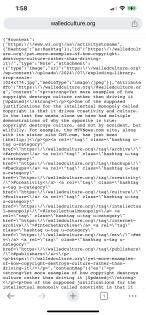
Perhaps I will finish this later, but it has been 24 hours since this happened. It is odd for a web guy to let this error stay up when Archive.org sends you traffic.
Update: The article was back up when I published this piece. Wiped from the face of the internet for, I am guessing, 48 hours. What does that demonstrate? That what was removed from the internet can be put back up… maybe.
Glyn Moody does not care about creators.
So far, the only thing Glyn and I can agree on regarding creator support is that AI works should not be copyrighted. However, It does not take much digging into his site to see him write opinions that conflict with what I agree with him on, which also shows how little he values the creative community:
The actual cost of supporting artists in this way would be relatively small compared to the valuation of generative AI companies, and the potential of the market. The diminutive size of the copyright world compared to the digital sector is something that is often overlooked when people discuss the tension between the two. It was why a decade ago I suggested that Google should buy the entire music industry to solve the problems it was having with licensing material back then. The parallels with today’s issues are striking. – Glyn Moody
This is from the guy who makes his featured images through AI. But kudos to him for admitting Stable Diffusion is responsible. It would be great if they revealed who they sourced to build their AI model. Not likely to happen because they do not want to share the fees they collect with those artists.
After reading his latest piece arguing against copyright, it is surprising to see him make a pro-copyright/monopoly argument. The idea of supporting Work-for-Hire contracts is troubling.
I might go into a little too much detail about comics.
If you know me and we are talking about comics, you know I likely will talk about Jack Kirby. A man I cannot help but think of as I read, “The actual cost of supporting artists in this way would be relatively small,” which is what everyone he rails against thinks. It is certainly what Marvel thought. However, this is more insidious than what Marvel did. The idea of an AI learning to duplicate Jack Kirby is horrific and closes the door on future artists.
Despite his contributions to Marvel, he received no royalties, retirement plan, or health insurance. Like many creators of his time, he had a Work-for-Hire contract. His works today can be accessed online through subscription services or freshly reprinted. I have not even gotten into the merchandise available now. Jack Kirby spent his last decade fighting Marvel for his storyboards. What would have happened if Marvel had treated Jack Kirby properly? What fantasy worlds could we have seen? This was a destruction of culture.
Glyn Moody’s next paragraph is not any better.
I also think that the material generated under such a scheme should be placed in the public domain for anyone to use. Once generative AI companies have trained their systems on the new material, there is no need for them to try to make money from restricting access as a publisher would. Moreover, the more public domain material there is out there, the more people could build on that material to produce new works. This would create yet more high-quality human-generated material that could be analysed.
This paragraph is illogical and contradicts the feasibility of this solution for supporting artists and fostering innovation. Feeding a system that will replace you is not a motivating idea, and it certainly does not make sense from a business point of view to pay for something only to toss it out into the public domain for competitors to use. There are only so many free samples you can give out when trying to make a sale. This likely means saturating the content with ads, as that is the only way I can think of for a company to profit.
–Intermission–
Since I am talking about Jack Kirby, I thought I would share some cover scans from my collection of my favorite Jack Kirby covers. While he was a fantastic artist, he was also a world-builder.
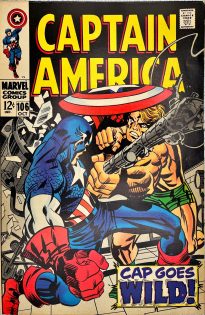
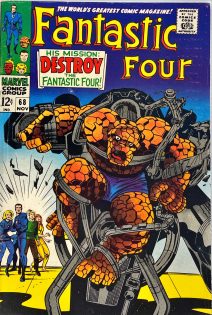
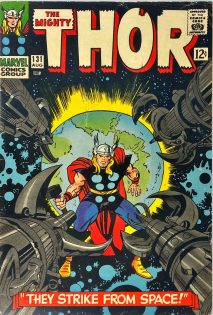
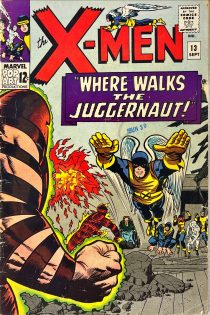
—End of intermission—
Eventually, the Work-for-Hire contract had consequences for Marvel
When Todd McFarlane, Eric Larsen, Rob Liefeld, Jim Lee, Marc Silvestri, and Jim Valentino formed Image Comics, it left Marvel with a vacuum of artist talent (…yeah, I am going to say it: Rob Liefield was not a loss). Todd claimed that this all started once he started seeing Marvel make merchandise with his art, and all he wanted was to have some of it. Merchandise I bought, which I think he should have been compensated for.

However, later, Todd McFarlane did to Neil Gaiman what Marvel did to him, which is why I am no longer his fan.
While I fell in love with comics in 1989, this treatment of creators killed my drive to subscribe by 1996. It did not help that the cost per issue doubled after 6 years, and gimmick covers (which add to the cost) were becoming far too common. Perhaps if the stories were still good, I would have suffered for them. As I suffered for 1/3rd of the Iron Man Vol 1 issues, I was offered them for $200, and I lived off of carrots, potatoes, ramen, and peanut butter for a month. I returned to collecting in 2022 after my collection was returned to me. I have had a hard time justifying paying more than $2 for books produced after 1995, but I have thrown down hundreds for a beat-up copy of Amazing Spider-Man 25, a Silver Age issue, without blinking an eye a few months ago. On top of that, I paid for it to be pressed and another $20 to protect it in a Magnetic Comic Book Display (yes, this is an affiliate link) on top of the mylar, backing, and extender sheets. …I might have paid more than it was worth, but I am happy to have it in my collection.
Having recently finished Thor Vol 1, I want to contrast the issue that got me into Thor Vol 1 issue 353, which I spent years pursuing, the full Surtur Saga, a beloved part of my collection, versus Thor Vol 1 issue 502, I will likely never read, just here to claim my collection is complete. I paid $8 for 502. Perhaps I could have gotten it for cheaper if I had been patient.
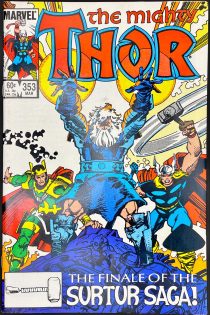
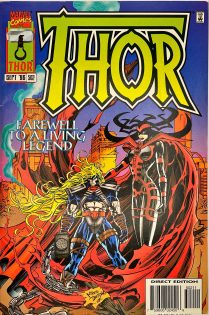
Thor 502 is a consequence of Marvel not valuing the writers and artists behind their works
Art, and not good art, I might add, replaced story. As for character development, it was sacrificed for profit at the moment. I might get a lot of hate for this; while the founders of Image are awesome artists (I am not talking about Rob Liefield), most are not great storytellers. This is likely the same conclusion Marvel and other publishers made as they watched Image pump out issues in the hundreds of thousands, which led to them copying Image. Yes, they even copied Liefield’s style, who copied everyone. It is hilarious that he would complain about Marvel copying him.
Around 1996, I stopped collecting, unaware of how many issues were flooding the market for people unconcerned with stories while only thinking they would get a quick return on their investment. Soon, they realized that this would not happen and stopped buying. Meanwhile, I was not the only loyal reader who stopped buying. Titles that had celebrated their 30th anniversaries that decade were ended. Titles that brought me into the Marvel Universe. Marvel went bankrupt in 1996, causing them to sell off movie rights. Which I feel still has consequences to this day, with classic stories retold by those who did not read the books.
I wonder what would have happened if Marvel had valued their creators.
I realize I dragged on there, but comics are a passion that led to my becoming Mr. Spider. However, I wanted to provide an example of the failures in Glyn’s business model. He wants a system that pays workers to create but no share in the profits from use. In his AI article, his arguments against copyright are undermined by his dystopian dream of creativity being done by machines. I guess he justifies this idea by having it all in the public domain, somehow filling the dream of preserving information from the past. However, it does not ensure the future where it is created by people, which is the destruction of culture. Perhaps I am wrong to bring up Jack Kirby and Image comics because people do not like to be inconvenienced and are not big on the idea of investment. But, I do believe flooding a market with content is not dissimilar to what
I am hesitant to call him a journalist, a title that implies he is not biased in what he covers, which I do not see. I see a radical view that is harmful to creativity and certainly not helpful to those who meet the definition of a journalist. I am not certain if I were to take a deeper dive into his works I would see him mentioning how major news outlets use the work of smaller struggling media without paying or crediting them. Does he talk about how many news outlets have closed? He does not mention Sinclair Broadcast Group, and their attempt to control local news stations. The future of media is not one he cares for, it seems unless AI is involved.
Glyn Moody is not wrong about preservation.
The idea of preserving culturally impactful media is not a bad idea. However, his approach is similar to that of the villains in comics, who think their idea of utopia can be accomplished if they remove one factor, never considering the consequences. While also fitting another common component in that scenario, he does what he condemns. It is a common theme in fiction, which I could write about at length. It’s also common in those who rail against gay rights. I feel his opinions come from a sheltered life or a lack of empathy. He knows enough to invoke communities affected through a quote but not enough to know how it will affect those communities and the creators he wants to remove rights from.
I think an argument could be made that if a creator does not actively preserve media, the rights should be in the public domain. Though it is an argument, I think it only works if it is intended to be publicly available to make a profit. In addition, I would say that companies must ensure that their content is commercially available to the online public to keep the copyright, especially as stores phase out hard copies of music and movies. If not available, it is not profitable and therefore invalidates the need for a copyright. Or in short, use it or lose it. With the expiration of the copyright, I feel it should have limited commercial use, such as for documentary purposes. Content that does not transform the original should be non-monetized, and I feel reaction videos fall under the category of failure to transform into new meaningful content. However, I do not think we have politicians who can enact this kind of law.
A great example of failure to preserve is Doctor Who. The BBC purged episodes to reuse the tapes, storage limitations, and contract agreements, and… well, mistakes were made. I am disheartened to know that I have not seen all of Jon Pertwee’s episodes in their original glory (my second favorite doctor). A lot of media was lost in the past since studios did not see the value of syndication. So far, 95 episodes spanning the first three doctors. Other examples I can think of are the many music acts of the past, like the Temptations. Several of their performances are only available from channels that do not own the rights to those videos. While I normally would argue copyright, this is the only publicly available media that I generally find for such groups. This is alarming given the historical context of 60’s music, especially from black contributors. It is not out of the realm of possibility that those are the only copies, and that is why I never reported their theft. Other significant artists whose performances are not widely available include Nina Simone, Sam Cooke, and James Brown. Their contributions to music and culture are immense, yet much of their historical live performances and rare recordings remain inaccessible to the public.
There are many examples of media that were once available but are now difficult to find. Live’s first album, “The Death of a Dictionary,” which was only released on cassette tape, Beck’s first album, “Golden Feelings,” which is only available on vinyl and can rarely be found on eBay. Additionally, there are books that are no longer published, such as “The Forest and the Sea” by Marston Bates, and possibly some of his other works. Preserving these art and literature ensures that they remain accessible to future generations, maintaining their cultural and historical significance.
As I wrote this part, I wanted to include two albums I was missing from my Tina Turner collection, Rough and Love Explosion, but it turns out all of her albums are available. This means my current playlist is her catalog of works minus Tina Sings Country. I am just not a country fan (one of the reasons I am not in central Utah); however, I did get it and listened to it. If you like country, you will love that album.
I guess this is where I wrap up my thoughts on Glyn Moody
As I write this, one of the comments from someone responding to an archive.org post about their legal fight with publishers stands out to me. He has said he would never pay more than $4 for a book. As someone who collects reference books, not just comics, I find it hard to make that argument, especially knowing what it took to make them. After asking if he ever donated to archive.org, since he noted he used their lending library, he asked why when everything is free. Looking through his social media feed, I see he did not look like someone short on funds. There is a quote I am trying to think of that dealt with how charities resulted from society’s failures; as someone who works with animal rescues and is currently fostering, I watched my backyard be decimated because someone got a cat and did not get her fixed. Leaving it to me to catch her and her kittens, get them fixed and vaccinated, and try not to fail again at fostering. I do all these things on my dime, not on the rescues I work with. I did not even consider their extermination, which is inhumane. My garden and the wildlife that visited could have been spared had the person responsible for her got her fixed. The commenter who did not donate is much like the person who had the mother of the kittens I foster. He does not want to be responsible for ensuring that others have access. While at the same time, he does not understand what goes into what he enjoys.
As I dove into Glyn Moody’s site, I had to question the motives of the Kahle-Austin Foundation and what Archive.org represents. Given Glyn’s response to art, writing, and music, he seems not to understand the value of those who create it. He favors a system that leans toward copying them, and it’s hard not to believe that means replacing them. The idea of a single entity owning the music industry contradicts his anti-copyright stance, not to mention exposing his ignorance of the industry. Having one entity control all music means that the entity controls access. It’s not the best scenario for access that the Kahle-Austin Foundation claims to represent. This is who they fund and who Archive.org decided to promote when they shared his article. To drum up support for Archive.org’s fair use argument. Again, I do not believe they got legal counsel before using books unauthorizedly. But these days, I can’t help but wonder if they don’t think the laws apply to them like some. Did they think to ask for permission? Their attempt to invoke support through Glyn’s article has me questioning the motives of Archive.org.
Thanks for reading; I just thought I would share a few channels on YouTube that are making past content available.
Carol Burnett Show
The Ed Sulivan Show
Johnny Carson
The Midnight Special