
Last week I received an email from, Pinterest’s Litigation Team, that claimed to have reviewed my “various correspondence”, so I am going to lay out three examples of many for how I know they reviewed nothing.
In January, while appealing my suspensions, I responded to Pinterest’s templated denial by pointing out their failure to enforce spam policies. Having filed copyright/trademark claims against tens of thousands images, I’ve seen firsthand how Pinterest ignores clear spam violations, allowing accounts to steal content, use deceptive tactics, and distribute malware—all without consequence.
During one of the many times I had filed an appeal, I got the usual message:
Hi there,
Thanks for letting us know about this.
We’ll review your report for violations against our community guidelines. You can take a look at our policies for more information on what Pinterest considers to be spam.
If you need more help, feel free to reach out again through our Help Center.
Thanks,
I decided to respond, mostly due to frustration: “I realize you are using a templated response, but I need to address that part about reviewing Pinterest’s policy on spam.” I went on to detail an account that triggered a red warning screen on Chrome if you clicked on its links, providing evidence of its violations. Noting that for over a month I had tried to get it shut down.
Before I hit send, I had to acknowledge to myself what I was sending wouldn’t be responded to or acted on. I justified hitting send as a form of venting—not knowing I was only half right.
A Few Things Before We Get to the Heart of the Matter
I’m going to request that you set aside the fact that my accounts were suspended until after you review the rest. I realize that may overshadow the bigger picture and make me look like just some guy who got mad after violating the rules (at least that’s what my anxiety is telling me you’re thinking). I ask that you first look at what I submitted to Pinterest.
One last thing—a disclaimer: there are a lot of details to get out of my head, so I may revisit this to fix errors or realize I overlooked something. Isn’t it fun to think everything is perfect, only to realize after hitting publish that your mistakes become glaringly clear? /sigh
…Oh, and I may find something new that adds to the discussion—if so, I’ll note when I update this post. As always, changes can be tracked on The Wayback Machine… warts and all.
Pinterest Deleted Evidence of Inaction Related to Blogspot Malware
January 2, 2025
One glaring example was sienna1953, an account using stolen content and Blogspot URLs to mislead users. Blogspot has been a common evasion tool for spammers, enabling redirects, fake play buttons, and hidden malware, yet Pinterest fails to block these Blogspot accounts (at the subdomain level) or take action against repeat offenders. Even when accounts are reported multiple times, Pinterest’s system routinely ignores violations, while making it difficult for creators to protect their work.
For more details on how Blogspot is a problem: My notes on this Exploit.
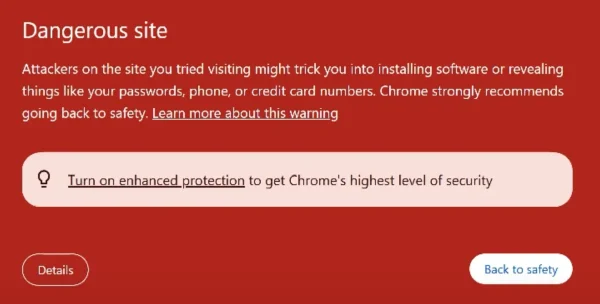
The account sienna1953 was reported multiple times, starting December 3, 2024, for using stolen content to redirect users to a malware site through Blogspot URLs. This was an individual account that used Blogspot as a redirect point rather than directly linking to the final destination. Notably, just clicking the Blogspot link triggered Chrome’s red block screen—without even reaching the final site.
A friend who tested the link confirmed that it redirected beyond Blogspot to another site. I did not check this myself, as clicking through would risk infecting my computer, despite asking them not to.
Pinterest has the capacity to act with expediency
The sienna1953 account was deleted only after I used it as evidence of Pinterest’s enforcement failures in my appeal—not when I initially reported it for spam or content theft through the normal channels. This demonstrates that Pinterest can act quickly when motivated, just not when enforcing their own policies for the average user.
This is also a Google problem
This is troubling for many reasons, one of which is that this happened on Google’s own property. Despite Blogspot being owned and operated by Google, this kind of abuse remains unchecked, allowing malicious actors to continue exploiting it as a redirection tool.
In addition, I cannot email the link or subdomain referencing this Blogspot on Gmail—it gets flagged as unsafe. If I add it to Google Sheets, the document gets a warning that it contains hazardous links.
It’s absurd that Google’s own security systems recognize the risk, yet Google has not taken action to remove the Blogspot account responsible.
Regardless, Pinterest allowed this account to remain active until I used it as evidence of their enforcement failures, not due to my copyright/trademark or reports of spam.
Note on the Video
This video shows Pinterest’s failure to act on a single fraudulent account that uses a Blogspot link to redirect users. At 1:34, I demonstrate what happens when you click on the out going URL for one of these pins, revealing that the link is blocked by Chrome due to security concerns.
I am not an expert in video production, so pardon my amateur attempt at making this video. However, it serves as a clear, real-time record of Pinterest’s inaction before they had the chance to remove the account involved.
ALSO: I also reported this Blogspot account to Google, but I have not confirmed whether they took any action, as checking the URL myself would risk infecting my computer. Regardless, Pinterest allowed the account to remain active until I used it as evidence of their enforcement failures.
It is also possible that Pinterest has not blocked the subdomain/Blogspot account, and I know that Pinterest does not always delete all of the content or block sites. So, careful clicking.
Multi-Domain Affiliate Network Gaming Pinterest’s System
January 4, 2025
Having noticed that Pinterest removed the account I reported on January 2nd without notifying me, I responded to the same email, pointing out that I saw the deletion.
This time, I presented evidence of Pinterest’s failure to enforce its policies against accounts gaming the system, as well as their inaction in blocking the domains involved. I also included all processed claim report numbers to demonstrate a clear pattern of abuse.
One particular network stood out—I found a common tracking code linking 73 accounts.
I provided Pinterest with 72 accounts, 38 of which were still active at the time I submitted them as evidence. I later identified three more accounts, bringing the total to 75, as of March 5th. These accounts belong to one affiliate among many operating a network of accounts. For more details see my Spam Affiliate Networks post where I am publishing my findings.
Some of these accounts were also included in the DMCA claims I filed on October 26, 2024. While Pinterest removed those specific accounts on November 26th, they failed to take action against the domains these accounts were promoting—despite clear evidence of a coordinated spam network violating Pinterest’s own policies.
The accounts were driving traffic to seven domains using the tracking code:
utm_campaign=dist&ly=native_one&mbid=enou0arwiryzy7kn_4f4bc6
This tracking code appeared in 343 instances of stolen content from my accounts across 17 DMCA claims.
The domains involved:
- scientistplus.com (158 stolen pins across 35 accounts)
- romanticfeed.com (90 stolen pins across 12 accounts)
- oppisumsauce.com
- juststarz.com
- luxurlist.com
- rightlivin.com
- reallifediy.com (discovered later)
One URL appeared frequently:
https://www.scientistplus.com/en/funny-even-us-love-photobombs?utm_source=pinterest&utm_medium=aff&utm_campaign=dist&ly=native_one&mbid=enou0arwiryzy7kn_4f4bc6
This single URL was embedded in 158 stolen pins across 35 different accounts.
The 38 active accounts from the 73 identified were collectively receiving 830,950 monthly impressions according to Pinterest’s own metrics.
Notably, these figures only reflect impressions after my stolen content was removed, meaning their original reach was likely even higher while they were still benefiting from my pins. Before Pinterest took down the stolen content, these accounts had even greater exposure, as my pins were driving traffic to them. Additionally, these numbers do not account for the 25 accounts Pinterest had already removed before this point, nor do they reflect the possibility that more accounts remain undiscovered.
Pinterest’s recommendation system actively promoted these accounts in multiple ways. I repeatedly found these stolen pins appearing in my home feed, demonstrating that Pinterest’s algorithm was treating them as high-quality, engaging content. Additionally, Pinterest recommended these same stolen pins to me as inspiration for my boards, further reinforcing the platform’s role in amplifying and legitimizing counterfeit engagement. Rather than filtering out fraudulent content, Pinterest was actively pushing these stolen pins to both me and other users, further increasing their visibility and reach.
Additionally, 6 of the 73 accounts were also sending traffic to BoredPanda.com using a different tracking code (utm_campaign=bilalmentor).
This was linked to:
Pinterest deleted those accounts like before, without notifying me
Before submitting this evidence to Pinterest, I recorded a video documenting all the active accounts. I had planned to upload it to YouTube the next morning, only to realize my microphone was off.
When I attempted to re-record, Pinterest had already deleted the accounts—not because they were flagged for copyright theft or spam, but because I had sent them to the appeals department as proof of Pinterest’s selective enforcement. I could not get them to do this any other way.
What this video covers:
- Fraudulent accounts using identical tracking codes to manipulate Pinterest’s algorithm.
- Spam networks creating mass accounts and redirecting users to unrelated sites.
- Pinterest’s failure to take action against these accounts despite clear evidence.
- Accounts being deleted only after I used them as proof in my appeal.
- Live documentation of spam behavior before the accounts were removed, with deletions becoming apparent when I attempted to access certain areas or refreshed the screen.
Issues with this video:
- Audio problems – background noise and some clarity issues.
- General clarity – recorded in real-time, so some parts may not be as clear as they could be.
- Unstructured presentation – this is a raw recording rather than a polished explanation.
I plan to redo this video when time allows, improving clarity and presentation. I may also seek out someone with more video production experience to refine it.
For now, this remains a crucial raw record of what was happening before Pinterest removed the accounts.
Spam Network Sending Traffic to Travelermaster.com
January 7, 2025
I provided evidence of 16 accounts I had previously filed DMCA claims against that were still active and using stolen content to redirect users to Travelermaster.com, which is part of a spam affiliate network similar to other domains I reported.
This network is similar to another domain I reported, parentingisnteasy.co, which attempts to install malware on devices. (sigh more I need to add to the timeline)
Initially, I thought Travelermaster.com was offline, but I had left a tab open with it. Several minutes later, it triggered my antivirus alerting me to malware activity.
While these 16 accounts were eventually deleted after I referenced them as proof of Pinterest’s inaction, Travelermaster.com remains active and has not been blocked by Pinterest, despite its clear connection to spam and malware.
Unidentified Network 1 (UN1)
(To be renamed when I identify it)
Upon review of some of the accounts I filed copyright claims against, I noticed multiple accounts linked to Travelermaster.com. As I re-reviewed these accounts before submitting them as proof of Pinterest’s failure, I found more sites engaged in this affiliate spam tactic. I think before January, I knew of around 20-30 sites, but I added 12 more just from these claims.
I am now calling this network Unidentified Network 1 (UN1).
I do not yet know which company operates UN1 or where affiliates sign up. Their domains information is private, the most I can tell is they were registered with Godaddy.com. I do know that:
-
At least six sites in UN1 share the same website theme as Travelermaster.com.
-
The Terms of Service on these sites were last updated on May 24, 2023, under Travelermaster.com.
-
They have the exact same Terms of Service, except for a single link at the beginning, which either directs to the site itself or a dead WordPress account.
Example:
Welcome to TravelerDreams – and thank you for visiting our website, available at:
https://stagingtrd.wpengine.com/ (the “Site”) -
Some of these sites have appeared in other claims outside of claims with these specific accounts.
-
Some of these sites were being promoted by the 16 accounts I previously reported.
-
All of these sites use similar tracking codes in their URLs, linking them through affiliate payments and engagement tracking.
These six sites along with travelermasters.com are confirmed as part of UN1 based on their identical structure & shared ToS that was Last Updated: May 24, 2023:
- Everydaymonkey.com
- Sportsbanaza.com
- Travelermaster.com
- Travelerdreams.com
- ThePrimaryMarket.com
- YourSportSpot.com
- TopPopToday.com
Disclosure: When I first reviewed Travelermaster.com in January, Avast blocked it from attempting to infect my machine. As of my latest check, it appears to no longer be actively distributing malware. However, given its previous infection, its connection to spam, and its involvement in UN1, I still consider it a high-risk site. Just because it isn’t flagged now doesn’t mean it won’t attempt to inject malware again in the future.
Additional Domains Receiving Traffic From These Accounts
These 16 accounts were actively sending traffic to 24 domains in addition to Travelermasters.com, including 3 confirmed as part of Unidentified Network 1 (UN1).
Domains from My Claims (UN1 sites noted):
- Everydaymonkey.com (UN1)
- Sportsbanaza.com (UN1)
- Defused.com (operated by ViralagAin)
- Ranker.com
- Visualchase.com (operated by Kueez)
- Rightlivin.com (operated by Kueez)
- Romanticfeed.com (operated by Kueez)
- Luxurist.com (operated by Kueez)
- Boredpanda.com
- Juststars.com (operated by Kueez)
- Travelerdreams.com (UN1)
- Visualchase.com (operated by Kueez)
12 Additional Domains (UN1 sites noted)
That Were NOT in My Claims but Had Similar Tracking Codes:
- Diply.com
- Weddingforward.com
- Yoursportspot.com (UN1)
- Theprimarymarket.com (UN1)
- Toppoptoday.com (UN1)
- Intuitionbackgrounds.com
- Thefunpost.com (blocked for spam, operated by Kueez)
- Parentmood.com (blocked for spam)
- Nameerabyfarooq.com
- Trendia.co
- Hair.com
- Gabitos.com
The accounts sending traffic to Travelermaster.com and its related sites were removed only after I used them as evidence. But unlike domains such as thefunpost.com and parentmood.com, which were blocked for spam, Pinterest has taken no action against Travelermaster.com.
If Pinterest were actually enforcing its policies, Travelermaster.com should have been banned along with the other blocked domains. Instead, they removed the accounts that exposed the connection while leaving the fraudulent domains untouched.
I will revisit this site and ParentingIsntEasy.co in a later post.
Video & Summary
This video documents multiple accounts still actively redirecting traffic to Travelermaster.com before Pinterest deleted them. The footage shows:
- Stolen content being used to drive engagement.
- Tracking codes appearing across multiple sites, linking them to a larger network.
- Some of these sites triggering malware warnings when visited.
- Live evidence of Pinterest’s failure to act, until the accounts were directly exposed.
Like the other videos, this is not a perfect production, but it serves as an unedited record of what was happening before Pinterest removed the accounts.
Pinterest missed an opportunity
Pinterest’s so-called Litigation Team claimed last week they had “reviewed the various correspondence” I sent through their support channels. But if that were true, they would have blocked every domain associated with spam I documented.
Considering security measures, like not letting multiple accounts send traffic to the same site or requiring verification before allowing users to link to external destinations. For example, YouTube requires verification before allowing links in video descriptions.
They could also reach out to Google, because Google is clearly unaware of the problems Blogspot poses.
…But no, they made it about an issue that I realize bringing up will make me out to be the bad guy—my account suspensions. I made my case in the last post for why I feel that is not the case, and I realize that asking for the benefit of the doubt is not an easy request. Yet, making an appeal is a Herculean task compared to being a spammer, who by definition seeks the least effort.
In this case, I provided clear examples that expose the fact that they reviewed nothing. Sites in clear violation of Pinterest’s spam policy still remain unpunished. Pinterest may have removed the accounts involved in gaming the system, but they left the underlying problem untouched. The spammers will simply create more accounts that send traffic to their sponsors, and to get more clicks, they’ll continue stealing better-performing pins. These bad actors remain unencumbered by the same policies that honest creators and users abide by.
- January 2: The sienna1953 account—one of many distributing malware through Blogspot—was removed only after I used it as evidence in my appeal, not when initially reported.
- January 4: 72 accounts—38 of which were still active—driving traffic to Kueez network sites disappeared only after I presented them as proof of Pinterest’s enforcement failures.
- January 7: 16 accounts funneling traffic to Travelermaster.com and 24 other sites vanished within hours of being used to expose Pinterest’s selective enforcement—yet the domains remains unblocked.
If Pinterest had actually reviewed my correspondence last week, they would have seen these reports in their own system. They would have known these accounts weren’t removed due to proactive enforcement, but only after I exposed their inaction.
Instead, they’re claiming to have “reviewed,” but reference nothing beyond my account suspension. Either they lied, or they knowingly ignored internal records to cover up past failures.
This isn’t just content theft—it’s theft of visibility, audience, and identity. Pinterest’s algorithm recommends stolen pins to the original creator’s own followers, hijacking engagement while creating brand confusion. Fake accounts don’t curate—they churn out random, unrelated boards, yet Pinterest still promotes them, filling feeds with junk that misrepresents legitimate brands. The result? A platform where stolen content outshines real creators, and users can’t tell what’s authentic anymore.
This isn’t “enforcement.” This isn’t “review.”
This is a cover-up. A platform-wide decision to protect Pinterest’s image, over the integrity of its users and content creators.
Thank you for reading, have a wonderful day. – More to come