I found someone Copytrack represents who creates AI images and sells them on Adobe, but that does not mean Copytrack.com is pursuing claims on those images. However, I do not think it is beyond them to pursue claims on images created under those circumstances, as I know their thoughts regarding AI-generated images. However, it’s from a 2019 post that does not mention the US copyright ruling in 2018, stating that copyright can only be associated with human-created works.
To be clear, I am comparing their 2019 article, which they should update, against the United States Copyright Office’s 2023 rules and regulations regarding AI-generated materials. Copytrack.com should consider updating their response and making clear if they represent AI-rendered images. Perhaps a neutral response, as they do represent clients who do not use AI to create their images.
I did not intend to create a response to Copytrack’s AI article.
I was working on an article on Copytrack.com that was supposed to get out in May. However, as I started writing it this month, it turned into three articles; I somehow got more focused on the last article, One I do not think Copytrack.com will like. As I researched their article, I realized that this part needs to be its own separate article. In the last article, I will refer people back here who want to understand my thought process in rendering a draft they might use. So what was one is not four.
My feelings about what it takes to copyright AI-rendered images mirror the guidance of the United States Copyright Office. Under the law here (United States) and in other parts of the world, it is not applicable for copyright unless it is created mostly under human influence. I agree with that and do not feel that it should ever change. However, I think that will change as large companies invest in AI; they will want to maximize their return, leading to them lobbying government officials. They, being the fickle turds that they are, will hope you are not paying attention so that they can blame their opponents later. I don’t think a reversal will be good, so get out and vote and follow the money. (you can debate me in the comments, not by email). Also, as long as the art is not sourced from unwilling participants, I have no issue with selling AI-rendered images.
However, I have concerns about how much of other people’s work was used in an unauthorized manner to train AI models. Tracking down who was sourced in training from companies that scraped the internet is as difficult as putting the toothpaste back into the tube after brushing your teeth and spitting it down the drain six hours earlier.
So, onto Copytrack.com’s 2019 article’
PETA Unintentionaly Did Something Good
(please do not tell them I said that)
In 2011, PETA euthanized healthy dogs and cats (EHDC would be a more fitting acronym), which I want people to keep in mind when I mention PETA. They filed a lawsuit on behalf of a crested macaque named Naruto in 2015 against David Slater, who owned the camera used by Naruto, claiming he had suffered economic harm. In my opinion, just so they could get publicity, the concerns of the animals were not the goal. In 2018, the U.S. Ninth Circuit Court concluded that Animals were ineligible for copyrights. (Naruto v. Slater, 888 F.3d 418, 420 (2018)) –
Sorry, personal pet peeve. Humans are animals. It should have been ‘only humans’.
Then, many uncreative people groaned over the consequences of that decision as the years passed. But that does not wash PETA’s sins away. Copytrack seems to have missed this period of copyright history.
Copytrack’s thoughts on AI Rendered Images
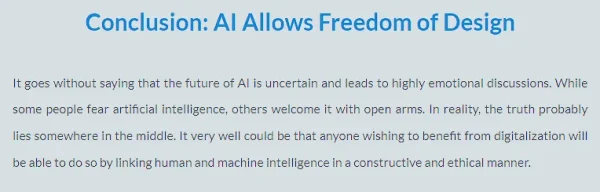
Conclusion: AI Allows Freedom of Design (To the uncreative?)
Here is what Copytrack has to say:
“This means that for creations to be protected under the Copyright Act, a certain degree of individuality is required. This is referred to as the so-called level of design and explains that a created work must not appear to be too arbitrary or too common. While there are undoubtedly numerous critics who do not like the works created by AI, there’s no denying that there is a high level of design that goes into many AI derived works.
To make things even more ambiguous, some creations must come from a human being, meaning that it must be the result of a human creative process, for ownership to be granted. This is true throughout continental Europe as well as other select countries throughout the world. Based on this understanding, it could therefore be determined that artificial intelligence itself could not legally be considered the owner of a creation.” Copytrack – Artificial Intelligence and Copyright: Is AI a Threat to Photographers?
Contrast that to the United States Copyright Office. These are some selective quotes I feel better explain what is copyrightable from section III of Copyright Registration Guidance:
Works Containing Material Generated by Artificial Intelligence section III. – Click here for the full document. –
- “If a work’s traditional elements of authorship were produced by a machine, the work lacks human authorship and the Office will not register it. For example, when an AI technology receives solely a prompt from a human and produces complex written, visual, or musical works in response, the ‘traditional elements of authorship’ are determined and executed by the technology—not the human user.”
- “When an AI technology determines the expressive elements of its output, the generated material is not the product of human authorship. As a result, that material is not protected by copyright and must be disclaimed in a registration application.”
- “In other cases, however, a work containing AI-generated material will also contain sufficient human authorship to support a copyright claim. For example, a human may
select or arrange AI-generated material in a sufficiently creative way that “the resulting work as a whole constitutes an original work of authorship.” Or an artist may modify
material originally generated by AI technology to such a degree that the modifications meet the standard for copyright protection. In these cases, copyright will only protect
the human-authored aspects of the work, which are “independent of ” and do “not affect” the copyright status of the AI-generated material itself. ’” - “This policy does not mean that technological tools cannot be part of the creative process. Authors have long used such tools to create their works or to recast, transform, or adapt their expressive authorship. For example, a visual artist who uses Adobe Photoshop to edit an image remains the author of the modified image, and a musical artist may use effects such as guitar pedals when creating a sound recording. In each case, what matters is the extent to which the human had creative control over the work’s expression and “actually formed” the traditional elements of authorship”
Copytrack’s ‘so-called’ article conflicts with the U.S. Copyright Office’s clear stance that works must result from human creative processes to qualify for copyright. Their statements could be interpreted as more ambiguous, potentially misleading readers about the requirements for AI-generated works. Their opinion lacks emphasis on the human creative element. I feel they do their client a disservice by not focusing on what is copyrightable and what is not. Esspecially with this part of their ‘so-called’ article:
“That being said, the decision to feed the algorithm with a specific selection of paintings and giving it the task of creating a portrait did come from a human being. In addition, the painting was signed with a line of code and fitted with a hand selected golden frame to house the portrait. This shows that the work was not created entirely by chance. Moreover, the whole AI creation wouldn’t have even been possible without the algorithm that Robbie Barrat himself developed!”
This would be like someone providing or making paintbrushes seeking credit for whatever is created with those brushes. Should the creator/provider also get credit if someone sticks the brush up their nose?
The U.S. Copyright Office requires substantial human creative input for a work to qualify for copyright protection. Simply making decisions about data input or presentation, such as feeding an algorithm with specific data or framing the output, does not meet the threshold for substantial human authorship. Copytrack.com’s ‘so-called’ opinion that these actions could influence authorship attribution is not aligned with the requirements for copyright protection.
The closing header says, “Conclusion: AI Allows Freedom of Design”. I wonder what part of art thinks creators need free from when they think a frame and some commands is enough work. OR is it freedom of design for those who do nothing to invest in the skill?
Does Copytrack represent clients that create images using AI?
I do not know, but they have pursued images they do not represent, have a client that sells AI-generated images on Adobe, and their feelings about AI are clear to me. Their consideration of input does not match the law. Time will tell if they have pursued claims on Images created through AI. If so, I hope this was disclosed and that they provided proof of human influence.
Maybe they just need to provide an updated view?